

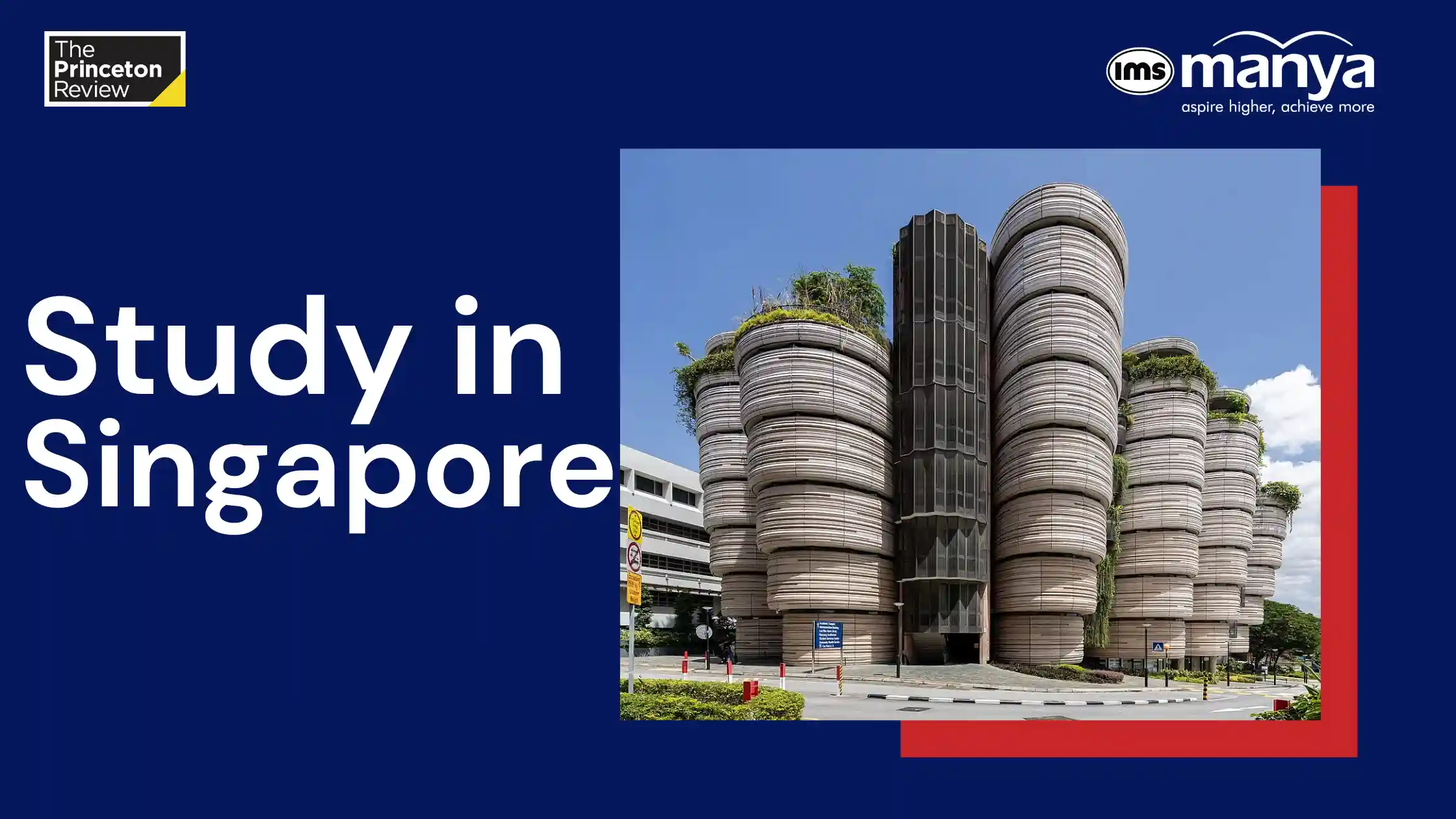
Singapore is considered the study-abroad destination in Asia for higher education and advanced research. In terms of quality of education, Singapore is ranked No. 2 according to the IMD Report 2025 and no. 5 according to the Global Innovation Index 2025. Initiatives such as the “Global Schoolhouse” and the presence of acclaimed universities have been instrumental in transforming Singapore into a global education hub.
The latest QS World University Rankings 2026 are listed:
| University Name | QS World Ranking 2026 |
| National University of Singapore (NUS) | 8 |
| Nanyang Technological University, Singapore | 12 |
| Singapore Management University | 511 |
| Singapore University of Technology and Design | 519 |
Why Study in Singapore?
- Top-ranked Student City: Singapore ranks 11th globally in QS Best Student Cities 2026, recognised for safety, quality of life, employer activity, and student diversity.
- World-class Universities: Home to globally ranked institutions like NUS (#8 worldwide) and NTU (#12 worldwide), consistently among Asia’s best.
- International Campuses Present: Leading global schools such as INSEAD (Asia Campus) and ESSEC Business School (Asia-Pacific Campus) are based in Singapore, offering internationally recognised degrees.
- Strong Research Ecosystem: Hosts the Singapore–MIT Alliance for Research and Technology (SMART) — MIT’s largest research centre outside the U.S., supporting innovation in tech, sustainability, and healthcare.
- Global Student Hub: Singapore attracts 79,000+ international students from across Asia, Europe, and North America, creating a diverse and multicultural learning environment.
- Safe & English-friendly: English is the primary language of instruction, and Singapore is consistently ranked among the safest cities in the world, ensuring easy adaptation for international students.
- Strategic Location: Gateway to Southeast Asia, ideal for regional exposure, travel, and cross-border career opportunities.
Higher Education Courses in Singapore
| Course | Duration |
| Undergraduate | 3-4 years |
| Postgraduate | 1-3 years |
| MBA | 12-15 months |
Eligibility Criteria
Admission requirements vary depending on the institution and the program level. However, some common requirements include:
| Program Level | Eligibility Criteria |
| Undergraduate Programs |
|
| Postgraduate Programs |
|
Admission Process
- Choose the course/program.
- Know the requirements.
- Prepare documents like high school examination result slips, documents with full name and date of birth, academic transcripts, medical reports, letters of recommendation from teachers and/or employers, and criminal records, if applicable. Submit the original copies of supporting documents when the program starts.
- Take English tests like the TOEFL or IELTS.
- Take the SAT for the baccalaureate degree. Score a minimum of 650 in each subject.
- Prepare a portfolio
- Pay applicable fees
- Send a request and wait for the university to reply.
Student Visa Requirements
To study in Singapore, international students must obtain a Student’s Pass. The process is straightforward, but there are specific requirements to follow:
Offer of Admission:
Students must first secure admission to an approved educational institution in Singapore. The institution will issue an In-Principle Approval (IPA) letter for the Student’s Pass application.
Application Process:
Students can apply for a Student’s Pass through the Immigration & Checkpoints Authority’s (ICA) SOLAR (Student’s Pass Online Application & Registration) system. The application usually takes two to four weeks to process.
Documentation Required:
Students must present the following documents:
- Passport copy
- Recent passport-sized photo
- Offer of admission from the institution
- Proof of monetary ability to cover tuition and living expenses
- Academic certificates and transcripts
- Completed eForm 16 and ICA’s security bond form (if required).
Study in Singapore Cost
Below is a table depicting the study in Singapore costs:
| Course | Approximate Cost of Tuition Per Year (SGD & INR) |
| Undergraduate | SGD 20,000 to SGD 50,000 (INR 14.2 lakh – INR 35.50 lakh) |
| Masters | SGD 30,000 to SGD 75,210 (INR 21.30 lakh – INR 53.40 lakh) |
| MBA | SGD 31,338 to SGD 99,953 (INR 22.25 lakh – INR 70.97 lakh) |
Top Scholarships in Singapore
Singapore has many scholarships that the government and universities provide to help international students. Here are some of the top scholarships:
-
Singapore International Graduate Award (SINGA):
This full scholarship is for international students doing a PhD in science, technology, or research. It covers tuition fees, gives a living allowance, and helps with travel expenses.
-
ASEAN Undergraduate Scholarship:
This scholarship is for students from ASEAN countries who have excellent academic records and strong leadership skills. Universities like NUS and NTU offer it for undergraduate studies.
-
Lee Kong Chian Graduate Scholarships:
NUS offers this top scholarship for exceptional graduate students. It covers tuition, a living allowance, and a one-time allowance for buying a computer.
-
NTU Research Scholarship:
This scholarship is for students in research-based graduate programs at NTU. It pays for tuition and provides a monthly allowance to cover living expenses.
-
MOE Tuition Grant Scheme:
This government grant helps reduce tuition fees for international students. In exchange, students commit to working in Singapore for three years after graduation.
Post-Education Career Opportunities
International students have the option of applying for a one-year, non-renewable Social Visit Pass that allows them to search for a job in Singapore after completion of their degree. Post this 1-year period, students can get an S-Pass (applicable for mid-skilled foreign employees) or an Employment Pass (applicable for foreign professionals, managers, and executives). In both these cases, the employer applies for the pass on behalf of the candidate.
Singapore’s education is ranked third globally according to the latest Learning Curve Report published in 2014 by the education firm Pearson. Recently, the Singapore Government has decided to bring down the percentage of international enrolments from 18% to 15%.
Top Recruiters in Singapore
After studying in Singapore, students have many job opportunities with well-known companies. Some of the top employers are:
- Technology & E-Commerce: Alibaba Group, Amazon, Google, Microsoft, and Grab.
- Consulting & Finance: Deloitte, Arthur D. Little, EY, and banks like JP Morgan.
- Healthcare & Pharmaceuticals: Johnson & Johnson.
- Energy & Manufacturing: Tata, Total Energies, and Amcor
- Professional Services: Wipro
Conclusion
Singapore is a great choice for students who want a high-quality education. The country has top-ranked universities, many courses, and varying research opportunities. Its location near other major Asian countries also makes it a good place for students who want to explore the region. Living in Singapore is safe, comfortable, and full of cultural experiences. The city is also well-connected, so it’s easy to get around. After graduation, Singapore’s strong job market provides good career opportunities. With its mix of academic quality, practical learning, and cultural diversity, Singapore is a great place for international students.
Frequently Asked Questions (FAQs)
Why should I study in Singapore?
Singapore has some of the best universities in the world, like the National University of Singapore (NUS) and Nanyang Technological University (NTU). These universities have high standards, strong industry connections, and a focus on research.
How much does it cost to study in Singapore?
Tuition fees vary by program and university. For undergraduate degrees, it costs around SGD 20,000 to SGD 50,000 per year & Master’s programs are about SGD 20,000 to SGD 75,000 per year, depending on the subject and university.
What scholarships can international students get in Singapore?
Singapore has many scholarships for international students, such as the Singapore International Graduate Award (SINGA) and the ASEAN Undergraduate Scholarship. Some scholarships cover tuition fees, living expenses, or travel support.
How do I get a student visa for Singapore?
International students need a Student’s Pass to study in Singapore. First, you need an offer from a university. Then, you can apply online through Singapore’s SOLAR (Student’s Pass Online Application and Registration) system. The process takes 2-4 weeks. You’ll need a passport, admission letter, proof of funds, and academic records. A small fee and a medical exam may be required.
Can I work in Singapore after I graduate?
Yes, international students can apply for a one-year Social Visit Pass after graduation to look for a job. Once you find a job, your employer can help you get an S-Pass or Employment Pass.