
Hundreds of students guided on a daily basis.
Programs after Graduation Programs
Experience a focused learning environment at IMS Manya classroom coaching with interactive sessions.
- IMS Manya’s classroom coaching is led by expert mentors certified from the Princeton Review with 99th percentile scores.
- Get personalized support and access to hundreds of practice questions and in-depth instructions on syllabi.
- Classroom coaching gives holistic preparation for verbal, quantitative, and analytical writing sections designed by expert mentors.



Programs after Graduation Student Success Stories

A GMAT Focus Score of 715, a 100th percentile score in Quant, and remarkable support from IMS Manya.

Aditya Patil
GMAT Focus - 715 (99%ile)With a GMAT Focus score of 715, I would like to thank all my IMS Manya mentors for their unwavering support.

Anand Shukla
GMAT Focus - 715 (99%ile)GMAT Focus score of 695 achieved because of detailed prep material, IMS Manya’s refined support, and a high aim.
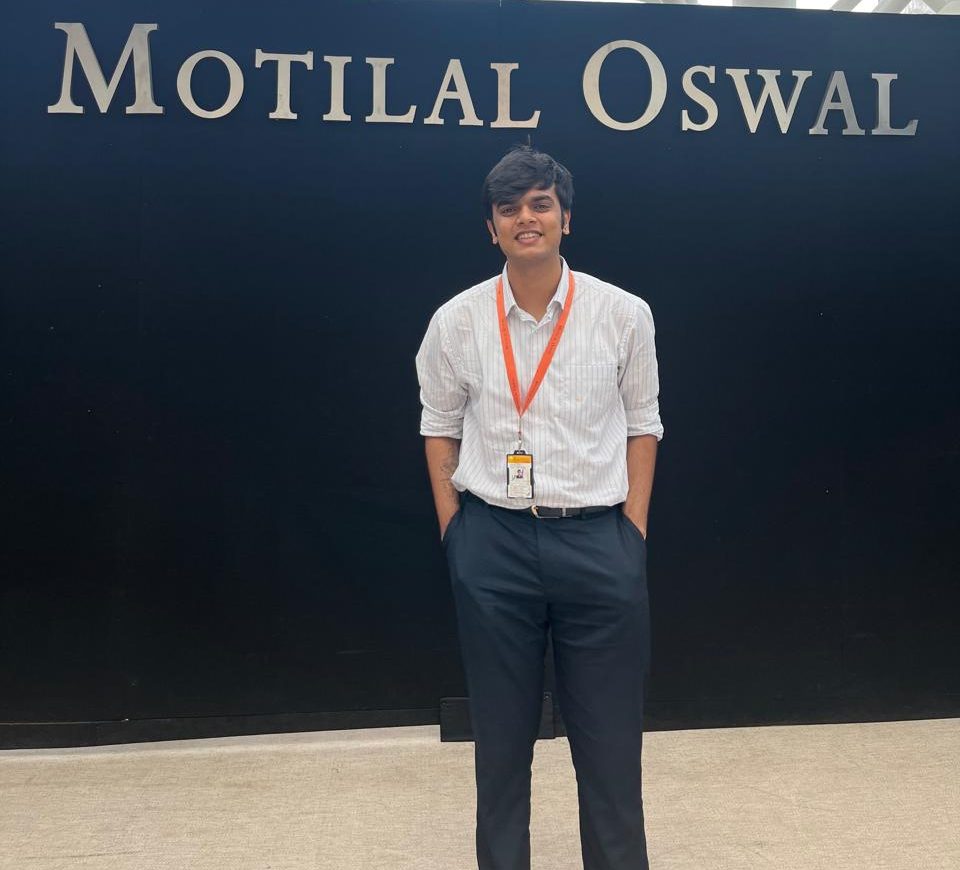
Astu Mehta
GMAT Focus - 695My GMAT Journey - From an initial mock with a 53rd percentile to an incredible 99th percentile with IMS Manya!

Divina Pooja John
GMAT Focus - 705, Kellogg School of Management - Deferred MBAMy GMAT score significantly improved – from 515 on IMS Manya’s Diagnostic Test to a 140-point boost on the GMAT Focus.

Manika Goel
GMAT Focus - 655With IMS Manya’s guidance and study material, I saw an overall improvement of 160 points in my final GMAT Score.

Parth Chhabra
GMAT Focus - 675I am truly grateful to Manya and my mentors for their constant support and guidance throughout my GMAT journey.

Raghav Gupta
GMAT Focus - 665Informative test prep, mock tests and consistent feedback by IMS Manya helped me achieve a GMAT Focus score of 695.

RK
GMAT Focus - 695 (98%ile)Secured a GRE score of 321, 165 in Quant and 156 in Verbal, because of IMS Manya’s support in my prep.

Saavi Kusre
GRE Score - 321The GMAT Focus and IELTS SLP programs provided by IMS Manya were instrumental in my preparation journey.

Shreyas J
GMAT Focus Score - 665, IELTS - 7.5The quality of IMS Manya’s additional practice material and the constant encouragement were very motivating.

Soumya Subhra
GMAT Focus Score: 675 (Q: 88; V: 84; DI: 79)IMS Manya’s exceptional support and guidance in my prep helped me score 715 (99%ile) in GMAT Focus.
Sushmetha RajaGopal
GMAT Focus - 725 (99%ile)Programs after Graduation Frequently Asked Questions
Yes, beginners can readily join. The classroom coaching starts with fundamental concepts and covers all three tested sections—Quantitative Reasoning, Verbal Reasoning, and Data Insights—from scratch, accompanied by structured practice questions, foundational drills, and personalized mentor support.
Yes. Over 140 business schools across 200+ programs in India accept GMAT scores. Leading institutions including ISB, IIMs (for 1-year executive MBA programs like PGPX/EPGP), XLRI (for Executive PGDM and select programs), SPJIMR, BITSoM, and Great Lakes accept GMAT scores for admissions.
Preparation typically spans 3 to 5 months (or 2 to 3 months in an accelerated track). The curriculum provides 54+ hours of live instruction (typically in 2-hour sessions twice a week), taking students from foundational core concepts through high-yield problem solving, sectional pacing drills, and full-length adaptive practice test reviews. There are 32 hours of Masterclass sessions that run thrice a year as per application rounds. Students can attend them post completion of their Phase 1 concept sessions.
Yes, IMS Manya’s GRE coaching can help you score 325+, but success ultimately depends on you. Many students have crossed 325+ with structured coaching when they stay consistent — attend classes regularly, take homework seriously, analyze every mock test, clear doubts promptly, and follow the study plan diligently. Coaching provides the right strategies and materials, but the score comes from your effort and discipline.
The IMS Manya GRE online coaching program is comprehensive and covers all the aspects of verbal, quant, and writing for the GRE. The curriculum is updated to reflect the new, shorter GRE and offers exhaustive in-class exposure and practice material. You won’t need any other resources or help to complete your GRE syllabus and score 320+.
Top-tier universities like MIT, Stanford, Harvard, UC Berkeley, and Caltech are highly competitive and typically expect 325+ (with strong Quant, often 165+ for STEM programs). Many reputable universities across the USA, Canada, UK, Europe, Singapore, and Australia consider 315–325 competitive, while most good institutions also admit students scoring 305–315 when supported by a solid overall application. A strong GRE score improves your admission chances, but final decisions depend on your complete profile — including GPA, research, projects, SOP, and recommendations. To maximize your chances for top programs, join IMS Manya – Princeton Review GRE coaching to enhance your score, master strategies, and build confidence.
The 30 personalized mentoring sessions at IMS Manya’s GRE coaching classes comprise one-on-one MyPlan sessions with expert mentors, including doubt solving, performance improvement feedback, and mock analysis. They also cover discussion of practice drills, mock tests, GRE tips, and test-taking strategies. These sessions ensure that your GRE preparation is fully customized to your strengths, weaknesses, and target score.
A competitive score generally ranges between 645 and 695 (approx. 88th to 98th percentile). A score of 705+ places candidates in the top ~99th percentile, highly competitive for M7 and top-tier global business schools. Candidates should aim to match or exceed their target schools’ published median scores. Scores are one aspect of the process , very important is the profile and correct course selection of the candidate.
The GMAT is a 2-hour 15-minute computer-adaptive exam comprising 64 questions across three 45-minute sections (with one optional 10-minute break):
1. Quantitative Reasoning: 21 Problem Solving questions (no calculator).
2. Verbal Reasoning: 23 Reading Comprehension and Critical Reasoning questions.
3. Data Insights: 20 questions (Data Sufficiency, Multi-Source Reasoning, Table Analysis, Graphics Interpretation, Two-Part Analysis; on-screen calculator allowed).
Candidates can choose their section order and bookmark/edit up to 3 answers per section.
The GMAT (Graduate Management Admission Test) is a computer-adaptive exam administered by the Graduate Management Admission Council (GMAC). Accepted by business schools globally, it evaluates higher-order reasoning, critical thinking, problem-solving, and data literacy skills essential for graduate management programs like MBA and business master’s degrees.